01A Table Is Not Just a Table
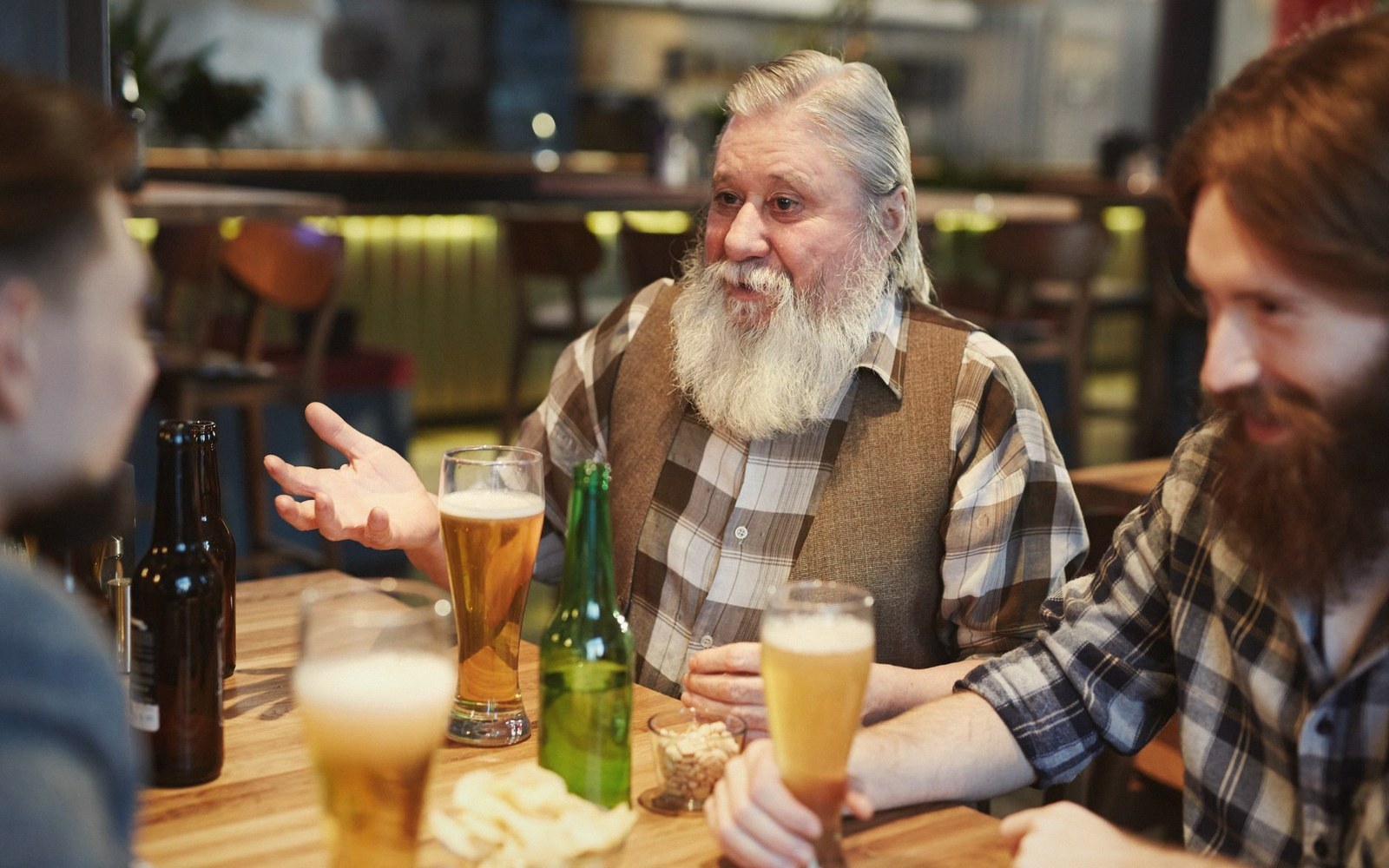
The pub quiz could have been designed as a room full of individuals. It was not, and the choice turns out to explain most of what makes the format durable. When a quiz night asks players to sit in groups and submit a single shared answer, it changes the nature of the exercise at every level: socially, cognitively and commercially.
The mechanics are simple enough. A team pools knowledge that no one member possesses entirely. Someone at the table knows the capital; someone else recognises the film still; a third person, who has said almost nothing for three rounds, suddenly knows which element has the atomic number 79 because their father was a chemist. The individual's ignorance is structural rather than fatal. That transformation — from personal failure to collective problem — is what keeps people coming back.
This is not trivial. A solo quiz format punishes the ordinary player repeatedly and personally. The team format converts the same deficit into a social moment. You don't know it; someone else does; you are glad they are there. The affect around the table is collaborative rather than competitive, at least internally. And because people feel useful rather than exposed, they tolerate a harder question than they would alone. Setters exploit this directly.
02What Teams Do to Difficulty
Calibrating a question for a team of four or six is a fundamentally different operation from writing for a single contestant. On a television format — a chair under a spotlight, one person answering for money — the setter must thread a precise difficulty needle for one brain. Difficulty is a property of the room, but on broadcast the room is one person plus millions watching at home. The question has to be answerable but not trivially so.
A pub quiz question aimed at a team operates with more slack, and setters use that slack deliberately. A question that might floor any individual in the room stands a reasonable chance of being retrievable across six people's combined knowledge. This means the setter can pitch harder — can go to the second album rather than the first, the deputy rather than the leader, the maiden name rather than the married one — without being cruel.
The practical effect is that teams raise the effective ceiling of the quiz. A round that would generate a miserable score for solo players produces a satisfying near-miss for a table of six. Teams don't just make the quiz more fun; they make harder questions viable, which gives the setter more material to work with and the audience a more interesting evening.
There is a less obvious effect, too. Teams tend to generate argument. Before the answer goes on the paper, three people may disagree about it. That internal negotiation — is it 1969 or 1971, are we confident enough? — is itself a form of engagement with the material. The quiz is not over when the question is read out. It continues for thirty seconds inside the group, which is thirty seconds more entertainment than a single contestant turning a card gets.
03Designing the Social Container
The team size question is genuinely a design decision, not an accident. Most pub quiz formats settle on a maximum of six, some four, a few eight. Smaller teams sit comfortably around a standard table, can have a quick conversation without being overheard by the next team, and are large enough to spread knowledge without being so large that one person dominates. The six-person limit also prevents a single team from monopolising expertise: a twelve-person supergroup would skew results across the whole room.
Anonymity within the team matters too. The person who scribbles the answer is rarely the person who knew it. There is no individual score, no individual embarrassment. A format that was designed to be a social event in a licensed venue figured out, consciously or not, that removing individual accountability removes the main barrier to participation for people who would never sit a solo quiz.
This is why the team structure is, at root, a hospitality insight as much as a game design one. The pub quiz succeeds commercially because it fills tables on quiet nights. It fills tables because mixed-ability groups can all participate in the same event without anyone feeling foolish for long. That resilience — the way a bad round or two does not expel you from the experience — is engineered by the team format, not an accident of it.
On a television format — a chair under a spotlight, one person answering for money — the setter must thread a precise difficulty needle for one brain.
The setter who understands this works with it consciously. You can include a question almost no individual will get because you know that, somewhere in the room, there is a table where one person has it. You can set the shape of a round knowing that the harder questions in the middle will generate table noise rather than silence. The format is not just a social structure. For anyone designing questions, it is load-bearing architecture.
Absolute Trivia is an independent publication about how quiz questions are written and where they come from. It is not a quiz service, question bank, league, or scorekeeper.